
I remember sitting at my kitchen table three years ago, staring at a spreadsheet that felt more like a chore than a plan, wondering why I couldn’t just make it work. I used to think that being “good with money” meant having the iron willpower to manually move hundreds of dollars into a high-yield account every single month, but let’s be real: life happens, subscriptions hit, and that willpower usually vanishes by week three. The truth is, if you’re relying on discipline alone, you’re playing a losing game; the secret to actually building wealth isn’t more willpower, it’s learning how to automate your savings so your bank account handles the heavy lifting while you’re busy actually living.
I’m not here to sell you on some complex, high-stakes investment strategy or a “get rich quick” scheme that requires checking your phone every hour. Instead, I want to show you how to build a few low-maintenance systems that work quietly in the background. We’re going to walk through the practical, step-by-step ways to set up your finances so that your future self is taken care of, without you ever having to think about it twice.
Table of Contents
Setting Up Automatic Bank Transfers for Mental Clarity
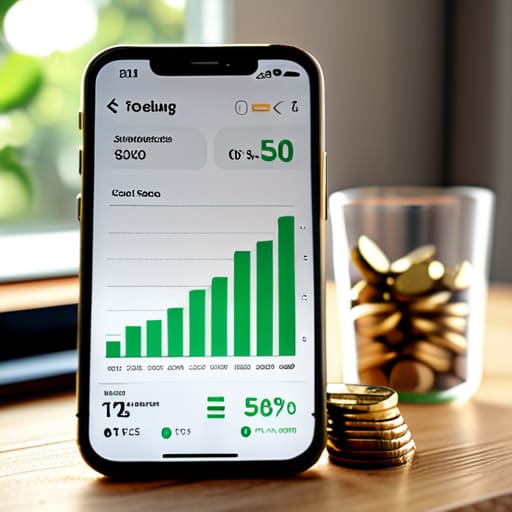
The first step to reclaiming your mental bandwidth is to stop treating your savings like a chore you have to remember every single month. I used to sit there every payday, staring at my banking app, debating whether I could “afford” to move fifty dollars into my savings or if I should just leave it in my checking account. That decision fatigue is exactly what we’re trying to eliminate. Instead, I recommend setting up automatic bank transfers that trigger the same day your paycheck hits. By treating your savings like a non-negotiable monthly bill, you ensure your future self is taken care of before you even have the chance to spend that money elsewhere.
If you find that a large, lump-sum transfer feels too intimidating or disruptive to your current budget, try a more subtle approach. You might want to look into round-up savings apps that capture the spare change from your daily coffee or grocery runs. It’s a low-friction way to start building an emergency fund automatically without feeling the sting of a massive withdrawal. These tiny, incremental wins add up surprisingly fast, and more importantly, they build the habit of saving without requiring any extra willpower from you.
Using Round Up Savings Apps to Capture Micro Moments

If manual transfers feel too heavy or intimidating, I love the idea of “micro-savings.” This is where round-up savings apps really shine. Most of these tools work by rounding up every transaction you make to the nearest dollar and tucking that spare change into a separate account. If you buy a coffee for $4.25, the app moves that extra $0.75 into your savings. It sounds tiny, but when you’re looking at it through the lens of building an emergency fund automatically, those quarters and dimes add up to a surprisingly decent cushion by the end of the month.
The beauty of this approach is that it requires almost zero willpower. You aren’t staring at a spreadsheet or deciding how much you can “afford” to lose from your checking account; you’re just living your life. It turns your everyday spending into a passive way to fuel your future. For me, it’s the ultimate way to capture the momentum of small habits without ever feeling like I’m sacrificing my current lifestyle.
Three more ways to take the decision-making out of your hands
- Treat your savings like a non-negotiable bill. Instead of waiting until the end of the month to see what’s left over—which, let’s be real, is usually nothing—schedule your transfers for the same day your paycheck hits. If you treat your future self like a utility company that needs to be paid, you stop negotiating with your own impulses.
- Sync your savings goals with your calendar. If you know you have a big trip coming up in six months or a wedding in the fall, set up a specific “sinking fund” automation for that exact amount. Breaking a large, scary number into smaller, monthly chunks makes it feel like a manageable project rather than a looming financial crisis.
- Audit your “subscription creep” once a quarter. We’ve all been there—paying for a streaming service or a fitness app we haven’t touched in months. Every time you cancel a useless subscription, don’t just let that money vanish back into your checking account; immediately redirect that exact amount into your automated savings. It turns a “loss” into a tiny, recurring win for your bank balance.
The Bottom Line
Automation isn’t about being a math whiz; it’s about removing the decision fatigue that comes with trying to “find” extra money at the end of the month.
Start small enough that you don’t feel the pinch, then let those automated systems do the heavy lifting while you focus on living your actual life.
Small Steps, Big Relief

At the end of the day, automating your savings isn’t about becoming a math whiz or having a massive windfall overnight. It’s about the combination of those steady, scheduled bank transfers and the effortless way round-up apps catch those spare cents you wouldn’t have noticed anyway. By setting these systems up now, you are effectively outsourcing the discipline required to build wealth. You’ve moved the heavy lifting from your brain to your banking app, which is the ultimate win for your long-term mental bandwidth.
Please remember that you don’t need to overhaul your entire financial life by Monday morning. Start with one small automation—even if it’s just five dollars a week—and let that momentum carry you. Life is going to happen; there will be unexpected car repairs, spontaneous dinners with friends, and general chaos. But when you have these invisible systems running in the background, you can navigate those moments without feeling like you’ve lost your footing. Build your safety net one small system at a time.
Frequently Asked Questions
Is there a risk that my automated transfers might accidentally trigger an overdraft if I have an unexpected expense that week?
That is such a valid fear, and honestly, it’s the exact kind of “mental load” I try to help you avoid. Yes, if your timing is off, an automated transfer can definitely trigger an overdraft. To prevent this, I always recommend a “buffer rule”: keep a small, designated amount—even just $50 or $100—in your checking account that you treat as a zero. It acts as a safety net so your systems work for you, not against you.
How do I decide on a specific amount to automate without feeling like I'm accidentally restricting my ability to enjoy my daily life?
This is the part where most people freeze up, and honestly, I get it. If you set the number too high, you’ll feel suffocated; too low, and it feels pointless. My rule of thumb? Start with a “low-stakes” amount—something so small you won’t even notice it’s gone from your checking account. Think of it as a trial run. Once you realize your daily life isn’t actually suffering, you can nudge it up by $10 or $20.