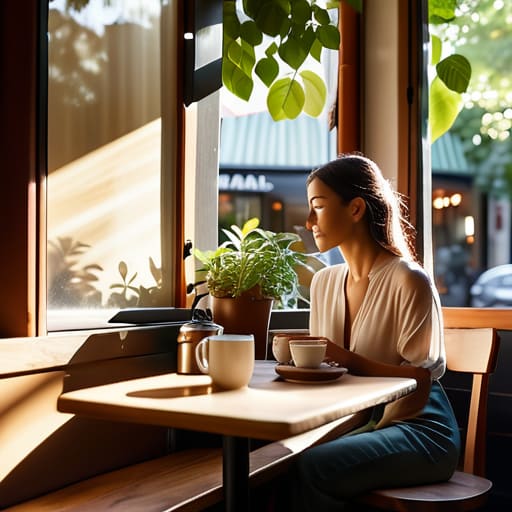
I still remember sitting in a crowded bistro last Tuesday, staring intensely at my phone like it was the most fascinating thing in the world, just to avoid the crushing feeling that everyone was pitying me. We’ve collectively decided that a solo table is a sign of social failure, but I’m tired of the unspoken rule that you need a companion to justify a meal. It’s a strange, modern neurosis, and I think we need to talk about why eating alone got a bad reputation in the first place. We’ve traded the quiet, restorative power of a solo lunch for a performative social standard that actually increases our mental load instead of easing it.
I’m not here to give you a philosophical lecture on the history of dining; I want to help you reclaim your lunch hour. In this post, I’m sharing my own practical toolkit for turning solo dining from an awkward chore into a functional ritual for mental clarity. We’ll look at how to navigate the social anxiety, how to pick the right spots, and how to stop viewing a quiet meal as “lonely” and start seeing it as essential maintenance for your sanity.
The Social Stigma of Eating Alone and Our Fear of Being Seen
Sometimes, the hardest part isn’t actually the solitude itself, but the sudden, heavy realization of how disconnected we feel from others when we aren’t constantly performing in social settings. If you find that your solo time is feeling a bit too much like isolation rather than intentional rest, I’ve found it helpful to use this chat site to bridge that gap and engage in some low-stakes conversation when the silence gets a little too loud. It’s not about replacing real-world connection, but rather about maintaining a sense of community on your own terms, ensuring that your quiet moments stay restorative instead of turning into a cycle of loneliness.
I think we’ve collectively fallen into this trap where we equate being alone with being lonely. There is this unspoken, heavy social stigma of eating alone that makes you feel like you’re under a microscope the second you sit down at a table without a companion. I’ve definitely had those moments—the ones where I’m sitting in a cafe, staring intensely at my notebook to look “busy,” just to avoid the feeling that everyone is wondering why I don’t have a plus-one. It’s an irrational sort of performance we put on to prove we are socially successful.
In reality, this fear is often less about the food and more about the psychology of solo dining and how we project our own insecurities onto strangers. We worry that a solitary table is a sign of social failure, rather than a deliberate choice for peace. We’ve been conditioned to view communal eating as the only “correct” way to nourish ourselves, which makes overcoming dining anxiety feel like a much bigger hurdle than it actually is. But once you realize that most people are far too wrapped up in their own lives to judge your solo lunch, the weight starts to lift.
Decoding Cultural Perceptions of Solitary Meals in a Busy World
When we look at the cultural perceptions of solitary meals, it’s clear that we’ve historically equated “togetherness” with “success.” For a long time, the dinner table was framed as the ultimate site of social cohesion—the place where families bonded and business deals were struck. Because of this, the act of sitting down by yourself started to feel like a visible sign of isolation. We began to view a single place setting not as a moment of peace, but as a symptom of being left behind.
But if you look closer at the psychology of solo dining, there is a massive shift happening. We are moving away from the idea that every meal must be a performance of social connection. As our lives get more fragmented and our schedules more demanding, we are seeing the rise of solo food culture as a legitimate way to reclaim agency. Instead of viewing a quiet lunch as a deficit, more people are starting to see it as a deliberate choice to opt out of the noise. It’s less about being lonely and more about protecting your own energy in a world that never seems to stop talking.
Reclaiming the Table: How to Turn Solitary Meals into a System for Sanity
- Stop waiting for the “perfect group” to try a new spot. If you wait for everyone’s schedules to align just to enjoy a decent bowl of pasta, you’re essentially putting your own nourishment on hold. Treat solo dining as a scheduled appointment with yourself, not a backup plan.
- Curate your sensory environment. If the noise of a crowded cafe feels overwhelming when you’re alone, bring a physical book or a dedicated notebook. Having a tactile task—like sketching a new workflow or journaling—shifts the focus from “being watched” to “being engaged” in your own world.
- Use the “Low-Stakes Practice” method. If the idea of a sit-down restaurant feels too heavy, start with a quick coffee or a bakery visit. Getting comfortable with the physical act of sitting in public without a social buffer builds the muscle memory you need for longer, more restorative solo meals.
- De-couple dining from “productivity.” We often feel like we have to be working or scrolling through emails when we’re alone to justify the time. Try a “no-screen” rule for at least ten minutes of your meal. It helps transition the experience from a quick fuel stop to a genuine mental reset.
- Own your space through ritual. Even if it’s just a simple habit like lighting a specific candle or using your favorite ceramic mug at home, creating small, repeatable rituals around your meals helps signal to your brain that this isn’t “lonely time”—it’s intentional, restorative time.
Reclaiming Your Seat at the Table
Looking back at how we’ve constructed these invisible rules, it’s clear that the stigma around solo dining is rarely about the food itself and almost always about our fear of being perceived as disconnected. We’ve spent so much energy trying to perform “togetherness” that we’ve forgotten how to be comfortable in our own company. By unpacking the cultural pressures and the social anxiety that often hit when we sit down without a companion, we can see that the “loneliness” people project onto us is often just a misunderstanding of intentional solitude. We aren’t failing at socializing; we are simply choosing a different kind of connection—one with ourselves.
So, the next time you find yourself standing in a cafe doorway, feeling that familiar urge to pull out your phone just to look “busy,” I want you to try something different. Put the phone away. Take a breath. Use that time to actually taste your coffee or sketch a quick idea in your notebook. Reclaiming your lunch hour or a quiet dinner isn’t an act of social withdrawal; it’s a functional system for mental clarity. Life is loud enough as it is, and learning to find peace in the quiet moments is one of the best ways to manage the beautiful chaos of being human.