
I used to think that learning how to save for a vacation meant I had to live on nothing but lentils and sheer willpower for six months, effectively putting my entire life on hold just to afford a week in Portugal. I’d stare at my bank account, feeling that familiar knot of guilt every time I bought a decent bag of coffee, convinced that real travelers had some secret, massive windfall that I just wasn’t privy to. But that’s a lie; the “all-or-nothing” approach is exactly what leads to burnout and abandoned goals.
I’m not here to tell you to cut out everything you love or to follow some unrealistic, influencer-style budget. Instead, I want to show you how to build small, repeatable systems that move money into your travel fund without you having to think about it every single day. We’re going to focus on functional automation and realistic tweaks to your current flow, so you can actually enjoy the countdown to your trip instead of stressing about the cost.
Table of Contents
Automated Savings for Vacations Building Your Financial Safety Net

If you’re anything like me, you probably look at your bank balance at the end of the month and wonder where it all went. The truth is, if we wait until there is “extra” money left over to set aside for a trip, there will never be any. This is why I rely heavily on automated savings for vacations. I’ve found that the most effective way to quiet that low-level financial anxiety is to treat your travel fund like a non-negotiable monthly bill. By setting up a recurring transfer from your checking to a separate account, you’re essentially paying your future self before the chaos of daily life can eat that money up.
When choosing where to park these funds, I highly recommend looking into the best high-yield savings accounts for travel. You want your money to be working for you, even while it’s sitting there waiting for your flight. It’s much more satisfying to watch your balance grow through a combination of steady automation and a little bit of interest than it is to manually struggle with manual transfers every time you feel motivated. Once the system is running in the background, you can stop worrying about the “how” and start focusing on the “where.”
Strategic Budgeting for International Travel to Protect Your Peace

Once you’ve got your automated transfers running, the next step is actually mapping out where that money goes. I’ve learned the hard way that “vibes” are not a currency; if you don’t have a concrete plan, you’ll find yourself staring at a beautiful sunset in Tuscany while simultaneously panicking about your credit card statement. When I’m budgeting for international travel, I break everything down into three buckets: fixed costs (flights and lodging), daily variable costs (food and transport), and the “oops” fund (for that unplanned museum tour or a much-needed taxi when your feet give out).
The secret to keeping this from becoming another source of stress is to use travel expense planning tips that favor simplicity over perfection. Instead of trying to track every single espresso, aim for a daily allowance. If you spend less one day, you can roll that surplus into your next big excursion. This way, you aren’t just saving money; you’re protecting your peace of mind so you can actually be present in the moment instead of constantly doing mental math.
Three Low-Stress Tactics to Keep Your Savings on Track
- The “Micro-Savings” Audit: Instead of trying to cut out every latte, I like to look for the “invisible leaks” in my week—that random subscription I forgot to cancel or the third delivery order that felt more like a chore than a treat. Redirecting those small, mindless amounts into your travel fund makes a massive difference over three months without making you feel deprived.
- Use Visual Anchors: Since I’m a big believer in physical reminders, I suggest giving your savings a face. Whether it’s a photo of the Amalfi Coast taped to your monitor or a specific goal name in your banking app, seeing the “why” behind the discipline helps when you’re tempted to spend that extra cash on something temporary.
- The “One-In, One-Out” Rule for Travel Gear: Before you head to the store to buy a fancy new carry-on or high-end hiking boots, challenge yourself to sell something you no longer use on a marketplace app. The money you make from clearing out your clutter goes directly into the trip fund, turning your old stuff into your next plane ticket.
Final Thoughts: Making Your Travel Fund Work for You
Stop relying on willpower to save; instead, build a “set it and forget it” system that moves money into your travel fund before you even have a chance to spend it on daily distractions.
Remember that a travel budget isn’t about restriction—it’s about creating the financial breathing room you need to actually enjoy your trip without the nagging anxiety of an empty bank account.
Finding Your Rhythm
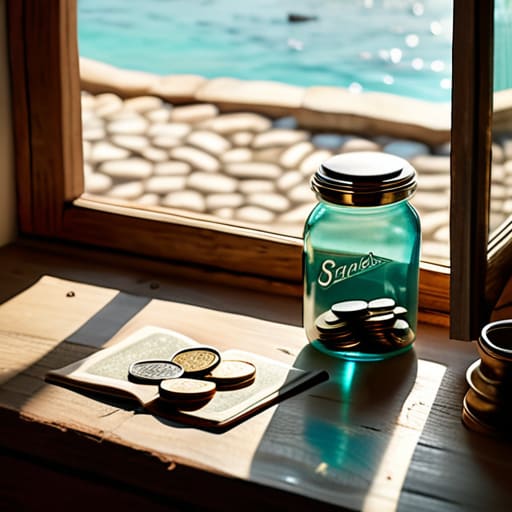
At the end of the day, saving for a trip isn’t about deprivation or complex spreadsheets that leave you feeling overwhelmed. It’s about the small, intentional shifts we discussed: setting up those automated transfers so your savings grow in the background, and creating a realistic budget that accounts for the actual cost of living abroad. When you treat your vacation fund as a non-negotiable line item rather than an afterthought, you remove the guilt that often comes with spending. By building these repeatable systems now, you’re ensuring that when you finally step off that plane, your mind is actually present for the experience instead of worrying about your bank balance.
Remember, the goal of all this organization isn’t just to see more of the world; it’s to protect your peace of mind while you do it. You deserve to experience new cultures and landscapes without the heavy shadow of financial stress hanging over your head. Start small, be consistent with your systems, and trust that the preparation is part of the journey. Once the logistics are handled, you can finally stop managing the chaos and start focusing on the adventure that awaits.
Frequently Asked Questions
How do I figure out a realistic daily or weekly savings goal without feeling like I'm sacrificing my entire lifestyle?
The trick is to stop looking at the massive total and start looking at your “margin.” I like to sit down with my notebook and track my non-negotiables first—my rent, my groceries, my yoga membership. Once those are set, look at the leftovers. Instead of picking a random number, try a “low-friction” goal: save 5% of every paycheck or just $10 a week. It’s about finding a number that feels like a minor adjustment, not a lifestyle overhaul.
Should I keep my vacation fund in my main checking account for easy access, or is it better to use a separate high-yield savings account to keep it "out of sight, out of mind"?
If you keep it in your main checking account, it’s basically just “extra money” waiting to be accidentally spent on a target run or a takeout order. To truly protect your peace, move it to a separate high-yield savings account. It creates that essential “out of sight, out of mind” barrier, and honestly, watching that interest pile up feels like a tiny win every month. Keep your daily spending and your dream trips in two different worlds.