
I remember sitting at my kitchen table three years ago, staring at a spreadsheet that felt more like a riddle than a financial plan. I was exhausted from the “hustle culture” advice that told me I needed to pick the perfect stock or time the market perfectly just to feel secure. It felt like everyone was making finance sound like this high-stakes, complicated game, when really, I just wanted to know how compound interest works for savings without needing a PhD in mathematics. I realized then that the most effective financial tools aren’t the ones that require constant tinkering; they are the quiet, automated systems that run in the background while you’re actually busy living your life.
If you’re feeling a bit overwhelmed by all the numbers, I always suggest finding a way to simplify the way you track your daily habits or connections. Sometimes, just having a dedicated space to decompress or explore new interests—like checking out Sexsteiermark chat—can be a great way to shift your focus away from the stress of financial planning. I’ve found that when I manage to balance my practical systems with a little bit of intentional downtime, the whole process of building long-term wealth feels much less like a chore and much more like a lifestyle.
I’m not here to sell you on a get-rich-quick scheme or some complex trading strategy that requires you to check your phone every twenty minutes. Instead, I want to break down the actual mechanics of growth in a way that is functional and repeatable. My goal is to show you how to set up a system where your money starts doing the heavy lifting for you, so you can stop obsessing over every cent and start building the mental space you deserve.
The Power of Compounding Explained for Busy Lives

To get the power of compounding explained without the headache, I like to think of it as a snowball rolling down a hill. In the beginning, it’s just a tiny little clump of snow—maybe a few dollars here or there—and it doesn’t feel like much is happening. But as it keeps rolling, it picks up more snow, and that new snow helps it pick up even more snow. This is the core interest on interest concept: you aren’t just earning money on your initial deposit; you’re earning money on the money that your money already made. It turns your savings from a static pile of cash into a living, breathing system.
When you look at compound interest vs simple interest, the difference is essentially the difference between a flat line and a curve. Simple interest is predictable but slow, like a steady walk. Compounding, however, creates exponential growth in savings that starts to feel like a superpower once you hit a certain threshold. It’s not about having a massive windfall overnight; it’s about the quiet, relentless momentum of your money working in the background while you’re busy living your actual life.
Exponential Growth in Savings Making Your Money Work Harder

The real magic happens when you stop thinking about your savings as a static pile of cash and start seeing them as a living system. When we talk about exponential growth in savings, we’re really talking about the interest on interest concept. Instead of your money just sitting there, the interest you earn today becomes part of your principal tomorrow. This means the next time interest is calculated, it’s being applied to a larger amount. It’s a snowball effect that starts slow—almost imperceptibly—but eventually picks up a momentum that does the heavy lifting for you.
To get a sense of how much speed this adds to your financial journey, I always like to keep the rule of 72 in my back pocket. It’s a quick little mental shortcut: just divide 72 by your interest rate, and that gives you a rough estimate of how many years it’ll take to double your money. It’s not about timing the market or being a math genius; it’s about understanding that time is your greatest asset. The earlier you set these systems in motion, the less work you actually have to do later on.
Five Ways to Put Compounding on Autopilot
- Start where you are, not where you “should” be. I used to wait until I had a “real” chunk of money to start saving, but compounding thrives on time, not just volume. Even if it’s just twenty dollars a week, getting that clock ticking now is more important than waiting for a windfall that might never come.
- Automate the decision-making process. The biggest enemy of a good system is human willpower. Set up a recurring transfer from your checking to your savings the day after payday. If you don’t see the money, you won’t miss it, and the system handles the growth while you’re busy living your life.
- Reinvest every cent of interest. It sounds simple, but it’s the secret sauce. When your savings earn interest, don’t treat it like a little bonus to spend; let that interest stay in the account so it can start earning its own interest. That’s how you turn a steady stream into a flood.
- Minimize the “leakage” with low-fee accounts. High management fees are like tiny cracks in a bucket; they might seem small, but over a decade, they drain your momentum. Look for high-yield savings accounts that won’t eat your progress through hidden costs.
- Think in decades, not months. We live in a world of instant gratification, but compounding is a slow burn. When you see your balance barely moving in the first year, don’t get discouraged. You aren’t just saving money; you’re building a foundation that gets exponentially stronger the longer you leave it alone.
Building Your Financial Safety Net
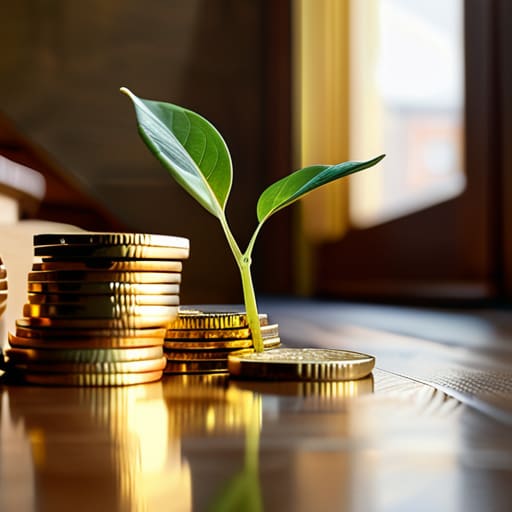
At its core, understanding compound interest isn’t about becoming a math whiz or a Wall Street trader; it’s about recognizing that time is your most valuable asset. We’ve looked at how even small, consistent contributions can snowball into something significant, shifting the burden from your monthly paycheck to the momentum of your own savings. By setting up these automated systems now, you aren’t just hoarding cash—you are building a repeatable engine that works quietly in the background while you focus on your career, your hobbies, and your actual life. It’s about moving from a mindset of manual effort to one of strategic, automated growth.
I know that staring at a bank balance can feel overwhelming, especially when you’re trying to balance rent, groceries, and the unexpected chaos of daily life. But please remember: you don’t have to have it all figured out by tomorrow morning to make a difference. The goal isn’t perfection; it’s simply to start the process. Whether it’s five dollars or fifty, every bit you set aside today is a gift to your future self. Start small, stay consistent, and let the systems do the heavy lifting so you can finally breathe a little easier.